History of Cars:
- The invention that changed the world
- Why cars matter in human history
- Overview of the automotive evolution
The Earliest Concepts of Self-Propelled Vehicles
- Leonardo da Vinci’s sketches
- Steam-powered experiments
- The dream before reality
The Age of Steam-Powered Vehicles
- 18th-century innovations
- Nicolas-Joseph Cugnot’s steam carriage
- Limitations of steam technology
The Birth of the Internal Combustion Engine
- Gasoline vs steam
- Key inventors: Karl Benz and Gottlieb Daimler
- The first practical automobile
Karl Benz and the First Modern Car
- The Benz Patent-Motorwagen
- Bertha Benz’s historic journey
- Commercialization of automobiles
Henry Ford and the Mass Production Revolution
- The Model T
- Assembly line innovation
- Making cars affordable
The Rise of Automobile Brands in the Early 20th Century
- General Motors, Ford, Chrysler
- European manufacturers
- Competition and innovation
Cars During World War I and World War II
- Military vehicles
- Technological advancements
- Post-war transformation
The Golden Age of Automobiles (1950s–1960s)
- Design evolution
- Muscle cars
- Cultural influence
The Oil Crisis and Fuel Efficiency Era (1970s)
- Impact of oil shortages
- Rise of Japanese automakers
- Shift toward compact cars
Technological Advancements in the 1980s and 1990s
- Safety improvements
- Computerized systems
- Globalization of car manufacturing
The Rise of Electric and Hybrid Vehicles
- Early electric cars
- Toyota Prius revolution
- Environmental awareness
The Modern Era: Smart Cars and Automation
- Self-driving technology
- AI integration
- Connectivity and infoturism systems
The Environmental Impact of Automobiles
- Pollution concerns
- Emission regulations
- Sustainable innovations
The Future of Cars
- Autonomous vehicles
- Hydrogen fuel technology
- The shift toward sustainable mobility
History of Cars
Introduction
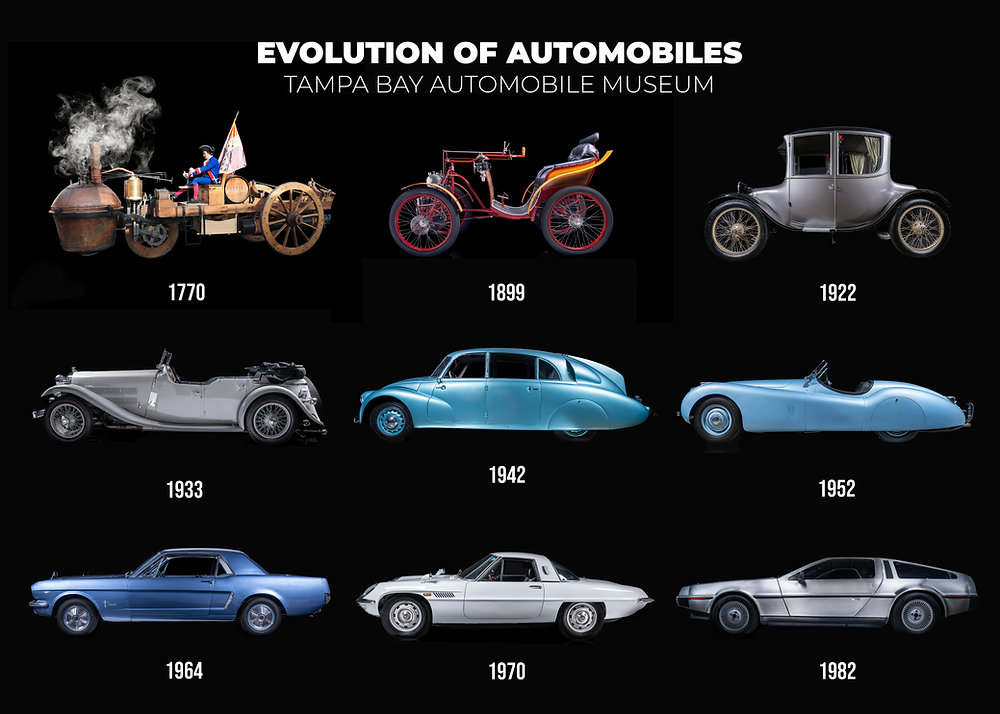
The history of cars is more than just a timeline of machines—it’s the story of human ambition, creativity, and progress. Imagine a world without cars. No highways stretching across countries. No road trips with family. No quick drives to work or school. Hard to picture, right? That’s because automobiles have become deeply woven into the fabric of modern life.
Cars didn’t just change transportation—they reshaped cities, economies, industries, and even cultures. They influenced how we build homes, where we work, and how we travel. Entire industries were born because of automobiles: oil and gas, road construction, traffic management, insurance, and more.
But the car didn’t appear overnight. It evolved slowly, shaped by inventors, engineers, wars, economic shifts, and technological breakthroughs. From steam-powered contraptions to gasoline engines, from bulky metal machines to sleek electric vehicles, the automobile’s journey reflects humanity’s relentless desire to move faster and more efficiently.
In the early days, owning a car was a luxury reserved for the wealthy. Today, cars are accessible to millions around the globe. The automobile transformed from an experimental machine into an essential part of daily life.
So how did it all begin? Who were the pioneers behind this revolutionary invention? And how did we get from steam-powered wagons to self-driving electric cars?
Let’s travel back in time and explore the fascinating history of cars.
The Earliest Concepts of Self-Propelled Vehicles
Long before engines roared to life on paved roads, the idea of a self-moving vehicle existed only in imagination. Humans have always dreamed of movement without relying on animals. Horses and oxen were the primary sources of transportation power for centuries. But what if a machine could replace them?
One of the earliest known concepts dates back to the 15th century. Leonardo da Vinci, the Renaissance genius, sketched designs for a self-propelled cart. His design used springs and gears to create motion. While it was never built during his lifetime, it showed that the concept of a car-like machine was already forming in brilliant minds.
Fast forward to the 17th and 18th centuries, inventors began experimenting with steam power. Steam engines were already being used in factories and trains, so the idea of applying steam technology to road vehicles seemed logical. These early experiments were bulky, slow, and difficult to control, but they planted the seeds for future development.
At this stage, the “car” was more of a scientific curiosity than a practical invention. Roads were not designed for such machines. Engineering knowledge was limited. Fuel systems were inefficient. Still, the dream persisted.
These early concepts may not have been commercially successful, but they proved something important: self-propelled transportation was possible. Like a rough sketch before a masterpiece, these early attempts laid the intellectual foundation for what would eventually become one of the most transformative inventions in human history.
The journey from idea to reality had begun.

The Age of Steam-Powered Vehicles
The 18th century marked the beginning of serious experimentation with steam-powered vehicles. Steam engines were already revolutionizing industries and rail transportation, so inventors wondered—why not use the same technology on roads?
In 1769, a French engineer named Nicolas-Joseph Cugnot built what is widely considered the first full-scale, self-propelled mechanical vehicle. It was a steam-powered tricycle designed to transport artillery for the French army. While innovative, it had major flaws. It was slow, heavy, and required frequent stops to build up steam pressure. In fact, during one demonstration, it reportedly crashed into a wall—making it the first recorded automobile accident in history.
Steam-powered vehicles continued to develop throughout the 19th century, particularly in Britain and the United States. Inventors created steam carriages capable of carrying passengers. Some even operated as early forms of public transportation.
However, steam vehicles faced serious challenges:
- They were extremely heavy due to large boilers.
- They required long start-up times.
- They consumed large amounts of water and fuel.
- Roads were not built to support such weight.
Additionally, governments introduced regulations that limited their use. In Britain, the famous “Red Flag Act” required a person to walk in front of steam vehicles waving a red flag to warn pedestrians. This severely limited their practicality.
Despite these setbacks, steam technology proved that motorized road transport was achievable. It was an essential stepping stone. But it was clear that steam wasn’t the perfect solution.
A better engine was needed—one that was lighter, more efficient, and easier to operate.
That solution arrived with the internal combustion engine.
The Birth of the Internal Combustion Engine
The true breakthrough in automotive history came with the development of the internal combustion engine in the late 19th century. Unlike steam engines, which burned fuel outside the engine to create steam, internal combustion engines burned fuel inside the engine itself. This made them more compact, efficient, and practical for road vehicles.
Several inventors contributed to this advancement, but two names stand out: Karl Benz and Gottlieb Daimler from Germany. They independently developed gasoline-powered engines that would change transportation forever.
In 1885, Karl Benz created a three-wheeled vehicle powered by a gasoline engine. Around the same time, Daimler developed his own four-wheeled motorized carriage. These machines were lighter and faster than steam-powered vehicles. Most importantly, they were easier to start and operate.
Gasoline quickly proved to be a superior fuel source. It allowed vehicles to travel longer distances without frequent stops. The engines were more reliable and required less maintenance compared to steam systems.
FAQs:
1. Who invented the first car?
The invention of the first car is often credited to Karl Benz, a German engineer who built the first practical automobile powered by an internal combustion engine in 1885. His vehicle, known as the Benz Patent-Motorwagen, is widely recognized as the world’s first true modern car.
Although earlier inventors experimented with steam-powered vehicles, Benz’s gasoline-powered automobile was the first to be practical, reliable, and commercially viable. In 1888, his wife, Bertha Benz, made the first long-distance journey by automobile, proving that the invention could be used for everyday transportation. Her trip helped gain public attention and boosted the car’s popularity.
So while many inventors contributed to automotive development, Karl Benz is officially remembered as the father of the modern car.
2. When were cars first mass-produced?
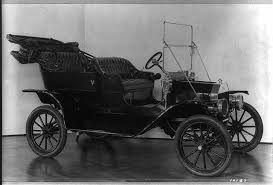
Cars were first mass-produced in the early 20th century, with Henry Ford leading the revolution. In 1908, Ford introduced the Model T, a car designed to be affordable and reliable for everyday people.
The real breakthrough came in 1913 when Ford implemented the moving assembly line in his factory. This innovation dramatically reduced production time and costs. Instead of workers building an entire car individually, each worker performed a specific task as the car moved along a conveyor belt.
This method allowed Ford to produce cars faster and sell them at lower prices. As a result, automobiles became accessible to the middle class, not just the wealthy. Mass production changed the automotive industry forever and shaped modern manufacturing systems worldwide.
3. Were there cars before gasoline engines?
Yes, there were cars before gasoline engines. In fact, the earliest self-propelled vehicles were steam-powered. In 1769, Nicolas-Joseph Cugnot built a steam-powered vehicle in France designed to transport military equipment.
Throughout the 19th century, several inventors continued experimenting with steam cars. Some were even used for passenger transportation. However, steam vehicles were heavy, slow, and required long preparation times before operation.
There were also early experiments with electric vehicles in the late 1800s. Electric cars were quiet and easy to operate, making them popular for a short time. However, limited battery technology reduced their range and practicality.
Ultimately, gasoline-powered internal combustion engines became dominant because they were more efficient, powerful, and convenient for long-distance travel.
4. How did cars change society?
Cars had a massive impact on society. They transformed transportation, making travel faster and more convenient. People were no longer limited to walking, riding animals, or relying on trains.
The automobile influenced urban planning. Cities expanded as people moved farther from workplaces, leading to the growth of suburbs. Highways, roads, traffic systems, and parking infrastructures were developed to support increasing car ownership.
Economically, cars created entire industries, including oil and gas, car manufacturing, repair services, insurance, and road construction. Millions of jobs were generated worldwide.
Culturally, cars became symbols of freedom and independence. Road trips, drive-in theaters, and car culture—especially in the United States—shaped modern lifestyles.
In many ways, the automobile reshaped how humans live, work, and connect.
5. What is the future of cars?
The future of cars is focused on sustainability, automation, and connectivity. Electric vehicles (EVs) are becoming increasingly popular as governments and companies aim to reduce carbon emissions. Major manufacturers are investing heavily in electric and hybrid technologies.
Self-driving or autonomous vehicles are also under development. These cars use artificial intelligence, sensors, and advanced software to navigate roads with minimal human input. While fully autonomous vehicles are still being tested, the technology continues to improve.
Additionally, cars are becoming smarter. Modern vehicles now include internet connectivity, advanced safety systems, voice controls, and smart navigation features.
The automotive industry is shifting from traditional gasoline engines toward cleaner, more efficient, and technologically advanced solutions. The future promises vehicles that are not only faster and smarter but also environmentally responsible.
Conclusion
The history of cars is a powerful story of human innovation, determination, and transformation. What began as simple sketches and steam-powered experiments eventually evolved into one of the most influential inventions in modern history. From the early ideas of self-propelled machines to Karl Benz’s first gasoline-powered automobile, and from Henry Ford’s mass production revolution to today’s smart electric vehicles, the automobile has come a long way.
Cars have done far more than provide transportation. They have reshaped cities, influenced global economies, created millions of jobs, and changed the way people live and travel.
Please don’t forget to leave a review.
Explore more by joining me on Patreon
Continued in next response…